

There’s something almost magical about pizza dough. With just a handful of humble ingredients—flour, water, yeast, and salt—you can create a foundation for one of the world’s most beloved foods. Yet behind that simplicity lies a surprisingly rich process that blends science, patience, and a bit of artistry.
The Science Behind Pizza Dough
At its core, pizza dough is about transformation. Flour and water alone form a sticky, shapeless mass, but once yeast is introduced, everything changes. Yeast consumes sugars in the flour and releases carbon dioxide, creating tiny air pockets that give the dough its rise and signature chew.
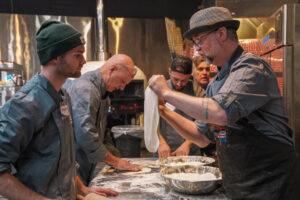
Chef Matt spent the two years improving both the flavor and the quality of our pizza dough. (And he won’t stop tinkering.) Training with Roman dough masters Vitangelo Recchia out of Florida and Ugo Veri from Italy introduced Matt to Italian flour, high hydration, and long-cold fermentation. Next Matt spent two days with Master Pizziola Leo Spizzirri in the famous Pizza Garage in Chicago to go deeper into the science behind the dough. All of this to bring his patrons better and healthier Pizza. Here is some of what Matt learned.
Fermentation and Flavor Development
This fermentation process is where flavor develops, turning bland ingredients into something complex and slightly tangy. “Talking about dough, you’re talking about enzymes… you have all of these natural enzymes… that are located on the exterior of the Grain in the bran and all of a sudden you could take five ten percent of that fresh ground grain added into your flour mix. I’m going to say it’s like putting Viagra in your dough… you see this cell structure explode and it’s happening naturally because we’ve harnessed those enzymes we’re not killing them right and this is where … “ from The Pizza Garage w/ Leo Spizzirri. This is why we at Hickory Social House use all Italian Flour and 10% Tipo1 (ti – po uno) wheat flour.
The Role of Kneading in Dough Structure
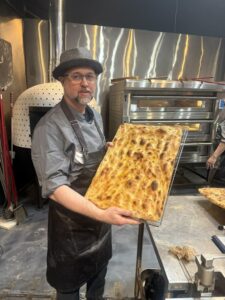
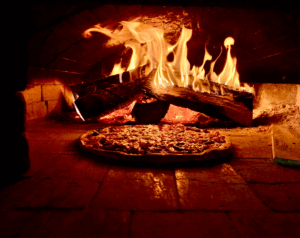
Kneading, folding, and mix time plays an equally important role. As you work the dough, you’re developing gluten—a network of proteins that gives pizza its structure. Too little kneading and the dough may tear easily; too much and it can become tough. Finding that balance is part of the craft, and with practice, it becomes almost intuitive. After returning from his first Roman pizza dough training Matt immediately invested in a quality spiral mixer and a top of the line Marra Forni wood fired pizza oven.
Why Time Matters in Pizza Dough
Time is another key ingredient that often gets overlooked. While it’s possible to make dough in a few hours, allowing it to rest longer—sometimes even days in the refrigerator—can dramatically improve both texture, flavor, and nutrition.
Benefits of Cold Fermentation
Cold, slow fermentation deepens the taste and makes the dough easier to stretch. In addition the enzyme breakdown during long fermentation yields significant health benefits. These benefits include:
- Improved Digestibility: The enzyme protease breaks down complex gluten proteins into smaller peptides and amino acids, which is much gentler on the digestive tract and can reduce bloating for individuals with mild sensitivities.
- Enhanced Nutrient Absorption: Phytic acid naturally locks up essential minerals like iron and zinc. During long fermentation, enzymes (phytases) degrade this phytic acid, making these minerals significantly easier for your body to absorb.
- Lower Blood Sugar Impact: Amylase enzymes break down starches into simpler sugars for the yeast, which alters the carbohydrate structure of the bread. This results in a lower glycemic index, causing a slower, more gradual rise in blood sugar levels.
- Increased Amino Acids & Bioactive Compounds: Fermentation promotes the formation of bioactive peptides and increases levels of beneficial amino acids like GABA (gamma-aminobutyric acid), which can help induce relaxation and regulate blood pressure.
- Better Gut Health: The breakdown of complex starches and fibers creates prebiotic byproducts that feed beneficial gut bacteria.
Conclusion: The Heart of Every Pizza at Hickory Social House!
In the end, pizza dough is more than just a base—it’s the heart of the pizza itself. Mastering it opens the door to endless creativity, from classic margheritas to inventive, unconventional toppings. And perhaps the most satisfying part? Turning a few everyday ingredients into something that brings people together, one slice at a time. Come and Enjoy an Artisan Pizza at Hickory Social House.
The Dough
We Start with a BIGA then 48-72 hour Cold Ferment- High Hydration Dough using Italian Artisan Flour with 10% Tipo1 Wheat Flour and as always, NEVER bleached or bromated!
- Flavor Complexity: The long, slow fermentation time builds rich, nuanced flavors and a slightly nutty aroma in the final baked good.
- Improved Texture: It strengthens the gluten network, helping to create a light, airy, and chewy crumb with large air holes (commonly seen in ciabatta).
- Shelf Life: Bread made with a biga naturally stays fresh longer and is less perishable.
The Sauce
Rossa Gargano crushed tomatoes from Puglia, Italy. light kosher salt & black pepper, hint of garlic & olive oil.
The Cheese
Premium Baccio Wisconsin Mozzarella & sharp Provolone Cheese Blend, with a touch of Grande Parmesan.